For years, functional beverages sold a promise: drink this, feel something. Adaptogens became a primary lever of this segment, with brands betting that consumers leaving alcohol still wanted a beverage that altered their state, and that these ingredients could deliver it.
Consumers do want an alcohol alternative that “does something.” But many functional beverages don’t do much—at least not on the timeline the consumer was expecting. While functional demand is real, it’s worth examining which ingredients can actually pay off the promise, and what that means for anyone planning to formulate a new alcohol alternative.
The expectation gap
The clinical literature on adaptogens isn’t damning, but it is specific about timing. The measured effects—reduced perceived stress, blunted cortisol response, improved sleep markers—show up over weeks of consistent use. They’re cumulative, not acute. If you down a functional RTD expecting the same-session change you got from a glass of wine, you’re measuring the product against the wrong timeline.
Alcohol set the reference point: a perceptible effect within one drink. When adaptogens are positioned as the alcohol alternative’s functional engine, they’re asked to perform on alcohol’s timeline. When they don’t, the consumer’s verdict isn’t “this works slowly” but rather “this doesn’t work.” Even if the ingredients are sound, the expectations sold against them can be too high. This is what “functional fatigue” describes. Not exhaustion with the idea of functional drinks—demand for those is still climbing—but an expectation gap when certain ingredients are taken to mean “immediate effect.”
Expectation vs. commercial success
Here’s where the thesis runs into contradicting evidence.
It’s reasonable to conclude that, if adaptogens don’t meet consumer expectations, the brands built on them should be struggling. Many are thriving. Last year, Hiyo announced a $19 million raise and launched nationally in select Whole Foods stores. In September 2025, Mingle Mocktails, now in more than 10,000 doors, launched an adaptogenic Mood line that drove the brand’s highest-revenue month inside 90 days. Little Saints recently hit $30 million in lifetime revenue on around $5.5 million raised. And even Costco has been steadily admitting the segment: Hiyo’s party pack reached 400-plus warehouses nationwide, followed by a Costco-exclusive Trip variety pack and Recess Zero Proof mocktails at select warehouses.
A brand can move product without leaning on same-session change. Hiyo leads with “the Float” and “Happy In Your Own”—a feeling and an identity, not a falsifiable efficacy claim. Mingle’s broader positioning is deliberately conventional—recognizable cocktail names, approachable flavors, low barrier to trial—winning on familiarity and its non-functional brand equity. De Soi is expanding away from direct alcohol comparison and into daytime occasions with Social Spritz, an adaptogen-infused line positioned as a subtler “light, lively lift.” The brands thriving are leaning into brand, with identity and occasion as the focus.
What consumers are gravitating toward
Ingredients gaining momentum today share the one property adaptogens lack: a perceptible, same-session effect. Kava and kanna both act on contact—kava as a felt physical calm, kanna as a serotonin-driven mood lift. Both can be measured against alcohol’s clock and not lose.
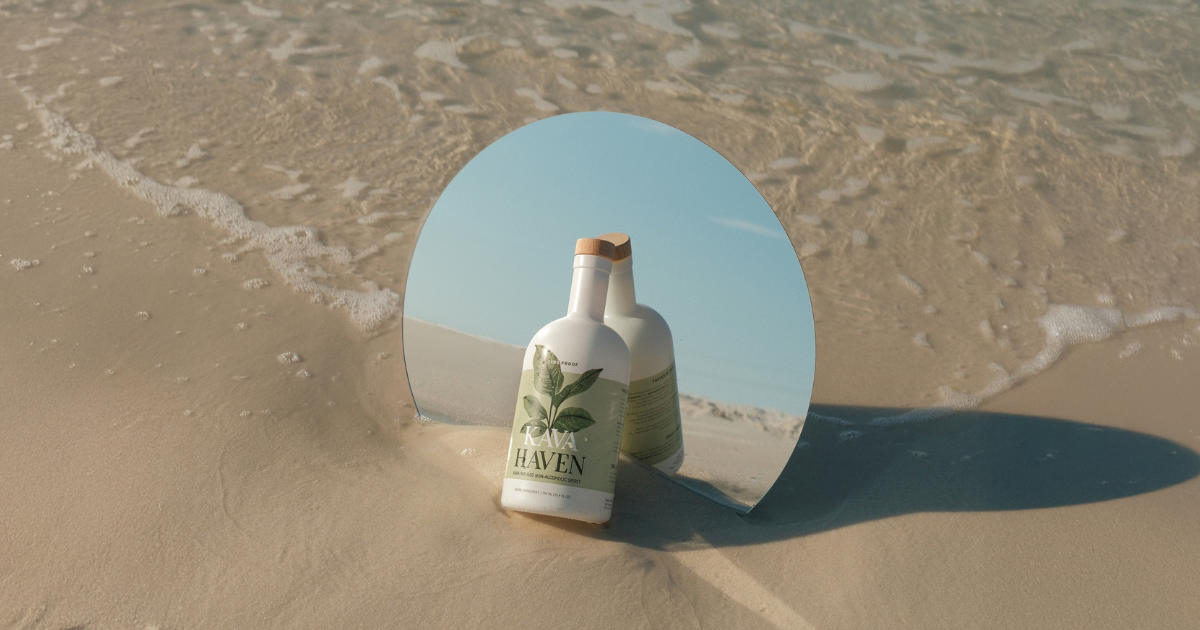
Kava’s traction shows up in supply-chain data: market-research firms project kava root extract growing 9 to 14 percent a year, with B2B supply the largest channel in one estimate. We’re also hearing from independent retailers across the U.S. that kava is the most-requested functional ingredient. Kava produces a felt physical calm—the tongue tingle, the loosening—within a single serving, which is what lets it hold up against alcohol’s reference point. Brands like Kava Haven promise “all of the buzz, none of the booze”—a line we’ve heard from countless brands since we started tracking the category in 2020. It feels valid here.
Kanna is following the same path from novelty into mainstream formulation, and the founders and operators moving toward it are naming the credibility gap directly. Becca Gardner, who spent years building the non-alc spirits brand Nkd before launching the kanna-based RTD Nakies, frames the pivot around what alcohol actually delivered: “The thing people love about having a drink was never really the alcohol. It’s the transition.” Jennifer Contraveos of On The Brightside, an RTD built on a kanna extract, puts the first wave’s failure more bluntly—consumers “bought the adaptogens, ordered the magnesium water,” and then “waited and waited and felt basically nothing,” which she cites as the second-largest barrier to repeat purchase in the calm-energy category.
Both kava and kanna carry a regulatory overhang adaptogens never did. Kava has an FDA safety history dating to a 2002 liver advisory, and both sit under FDA labeling and FTC claims rules that adaptogens rarely test. That risk is the price of the perceptible effect. The same potency that lets these ingredients pay off the promise is what draws the attention. Adaptogens come with less regulatory risk precisely because they’re gentle.
What this means if you’re formulating now
The segment has revealed two working strategies for the same underlying problem. One closes the credibility gap at the ingredient level—kava and kanna, inputs a consumer can feel in the session. The other closes it at the brand layer—sell the occasion and the identity, and let the functional ingredient ride along as a supporting note rather than a central claim. Both are winning. What we’d caution founders against: leading with a falsifiable efficacy promise built on an ingredient that can’t deliver on contact.
A brand leading with an acute-effect input but overselling the magnitude will struggle. A brand formulating with adaptogens for how they actually work—or wrapped in a brand strong enough that the claim isn’t the main focus—can still win. The fatigue in the category was never with a single ingredient. It was with the gap between what functional drinks claimed and what they delivered in the glass. The question for any operator formulating now: are you closing that gap in the liquid, closing it in the brand, or standing in the gap and leaning hard on customer acquisition when retention falls short?