Many beverage founders treat a Whole Foods buyer meeting as the finish line. The reality is the opposite: the meeting is roughly the midpoint of a process that can run three to five years from first contact, and the common missteps happen long before anyone responds to an email.
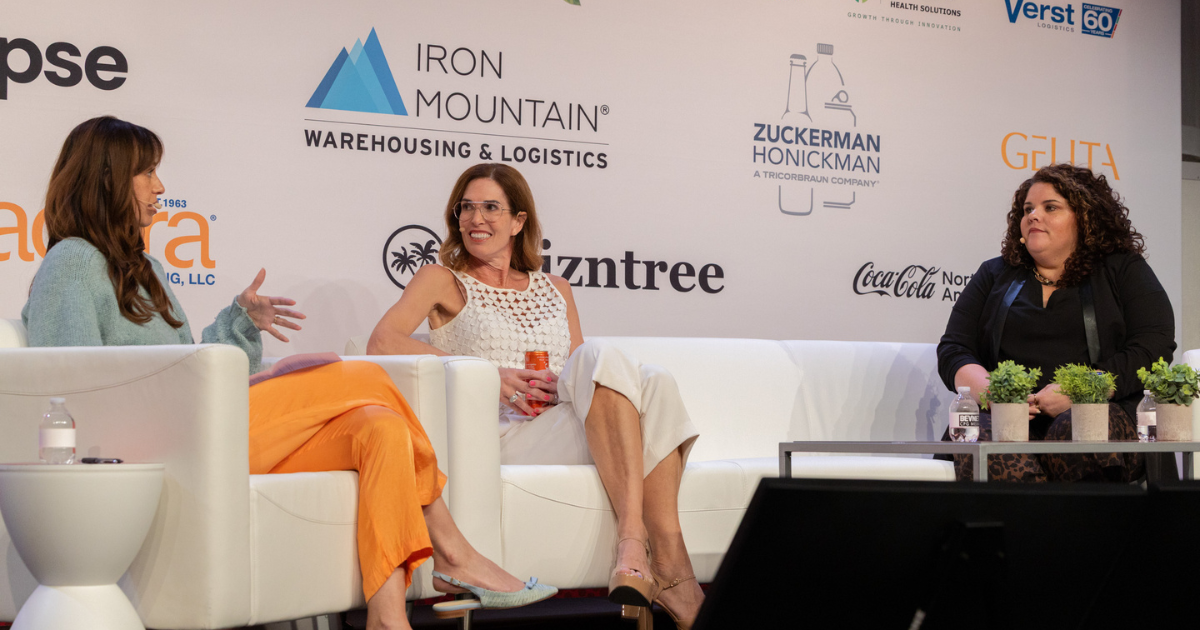
At last week’s BevNET Live, Mingle Mocktails founder Laura Taylor and Samantha Fletcher—Senior Category Merchant for Whole Foods’ Adult Beverage Non-Alcoholic category—walked through how Mingle went from a founder standing at a Whole Foods customer service desk in 2017 to the top-selling non-alc cocktail brand in the chain.
The timeline is the first filter
Taylor launched Mingle in 2017 and, within a week, drove to a Whole Foods, walked up to the customer service desk, and announced she had a product the store needed. She was redirected to the supplier portal. From there: years of quarterly emails to regional buyers, a foot in the door through the local forager program (roughly 50 stores, delivered out of her own car), expansion to the North Atlantic region, and continued quarterly outreach to national buyers who didn’t respond until 2022—when Mingle finally got the call that took the brand national.
Fletcher confirmed this isn’t an outlier. Even after a buyer agrees to bring an item in, six months is the floor, and 12 to 18 months before product hits the shelf is normal. The committee cycle, the category reset calendar, and the buyer’s own bandwidth all push back against a founder’s urgency.
A brand that treats Whole Foods as a near-term revenue line will misallocate runway against a timeline it doesn’t control. The brands that get in started the relationship years before they needed the placement, which means the right time to begin quarterly outreach is well before the brand is ready to scale into a national rollout.
Stay top of mind, but earn the attention with data
Mingle’s persistence worked because of what the emails contained, not their frequency. Fletcher was blunt about the failure mode: a buyer receiving dozens of cold pitches a week will not act on “this is the best drink you’ve ever had.” She’s seen that line countless times. What moves a buyer is something quantifiable, a data point that explains what the product does for the category.
Taylor’s early emails did the opposite of what many founders assume buyers want. She skipped the origin story. Instead, she defined the category for a buyer who, in 2017, had no framework for it: who the Mingle customer was, why Whole Foods specifically was the right venue, and what the incremental opportunity looked like. In her pitch, she leaned on data that the overwhelming majority of adult non-alc buyers also purchase alcohol—framing Mingle not as a substitution that cannibalized the existing set, but as an additive, better-for-you purchase that brought an incremental shopper to the shelf.
A merchant is reading every email—Fletcher was explicit that silence is not absence of attention—and scanning for a quantifiable reason to act. Your brand story doesn’t survive that scan, but a category-defining data point does.
The second discipline is tailoring. Fletcher won’t accept a pitch that reads as copy-and-paste, because her customer base differs from every other retailer’s. Mingle’s emails named the Whole Foods shopper specifically: the age demographic, the average spend, and where her products fit the existing basket. The pitch was built for one retailer, and it read that way in seconds.
Quarterly cadence keeps a brand top of mind without overkill. But each touch has to carry a quantifiable update—a velocity number, a new account, a category data point—tailored to that specific retailer’s customer. Persistence without substance trains a buyer to ignore you.
It’s a small buyer world
Buyers talk, and your reputation is everything.
Over years, Mingle worked with several Whole Foods merchants before reaching Fletcher. Fletcher noted that when she inherits a brand, she reads the notes left by prior buyers. Mingle had never said anything undesirable about a previous merchant, so every internal note read positively. Merchants talk; a founder’s conduct with one buyer follows them to the next. Burning a relationship with a regional buyer can quietly foreclose a national one years later. Treat every buyer interaction—including the rejections—as a note that the next buyer will read.
How to engage a buyer without becoming the problem
Fletcher described the path that loses brands as clearly as the one that wins them. The losing pattern: emails go unanswered, and each subsequent email gets a little more aggressive. That escalation reads as desperation and works against the brand.
Patience plus value is how to win. Put yourself in the buyer’s seat. Keep it concise enough to read on a phone screen. Add a useful data point each time. And critically, learn how each specific retailer wants to receive information, because the method varies. Some buyers won’t take a cold email at all, and using the wrong channel signals you haven’t done the homework.
On product innovation
There’s also a discipline around product innovation that separates serious brands from anxious ones. Once Mingle had earned the relationship, it could co-develop with Whole Foods—but only after demonstrating a solid, consistent brand identity first. Fletcher was clear that she doesn’t want a brand asking her what to make; she wants a brand that knows who it is.
That trust, earned over years, is what eventually let Mingle and Whole Foods co-create a new flavor—the Pineapple Paloma—built collaboratively to fill a white space the buyer identified. The product launch resulted in a 6,256% increase in net sales and a 252% spike in year-over-year unit sales. Taylor opened her innovation pipeline to the retailer, trusted the buyer’s read on the gap, and the payoff was a win neither would have reached alone.
The bottom line
The Mingle example collapses to a single principle that often runs against founder instinct: getting into Whole Foods is a relationship-compounding problem, not a sales problem. Taylor started years before placement was a possibility, led every touch with quantified value tailored to the retailer, and protected her reputation across a small, interconnected buyer network. Start early, because the relationship you build now is the one that pays off years from now.