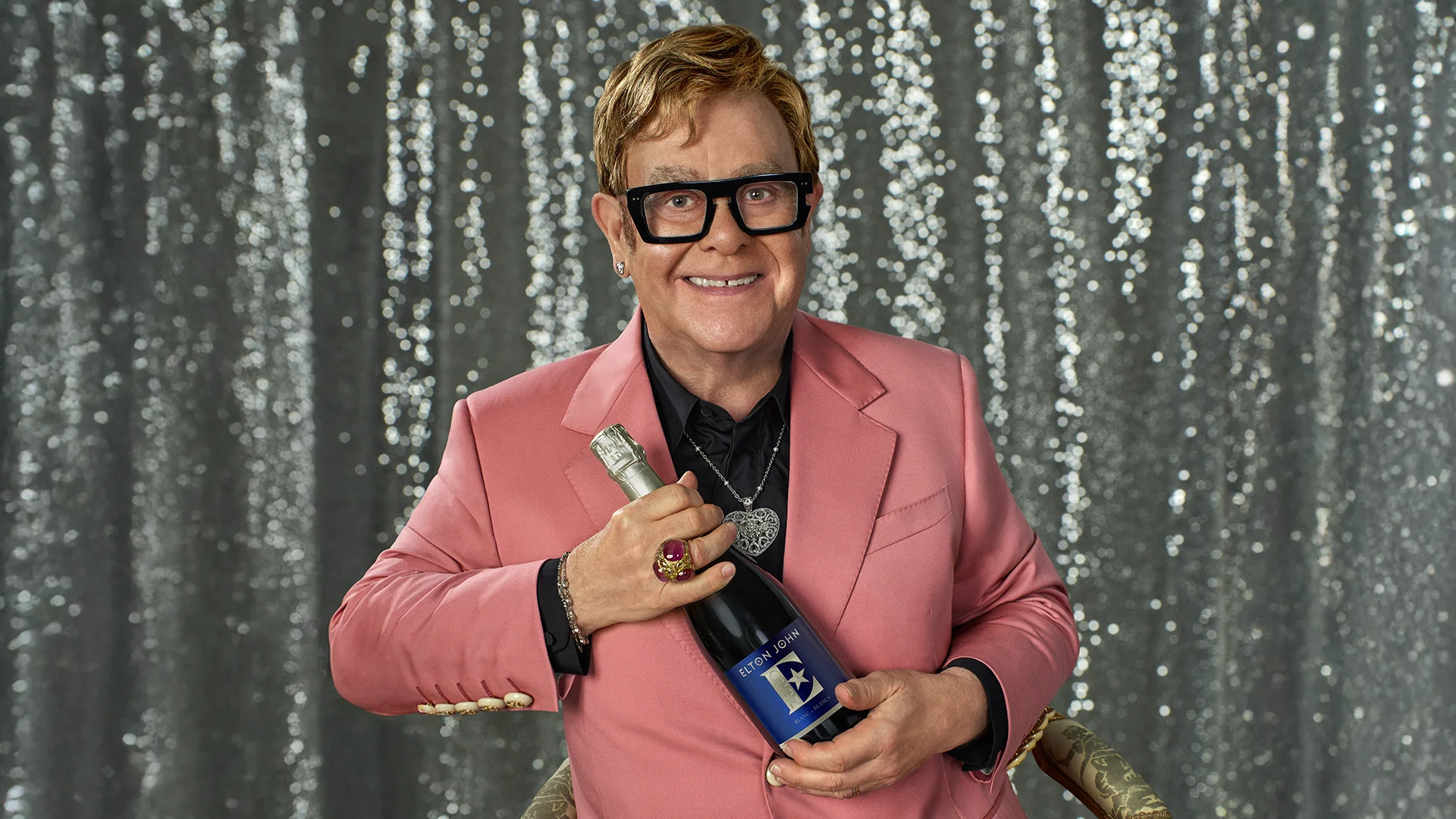
Elton John Zero launched into Sainsbury’s in January at £10 (~$13.50). Within months it had expanded to Tesco, Asda, Ocado, and Booths—and according to its distributor, became the fastest-selling non-alc wine Tesco listed in its spring range change.
When a celebrity brand scales quickly, observers naturally point to the name on the label. Elton John brings massive global reach alongside an authentic, decades-long sobriety story, making it tempting to chalk this win up to pure star power.
But fame only gets you so far in the grocery aisle. While his celebrity influence undeniably convinced shoppers to pick up the bottle the first time, it’s ultimately just one of four distinct inputs driving this success story. To understand why this product is actually moving—and, more importantly, why customers keep coming back—we have to look past the marquee name and dig into the mechanics behind the launch.
The name explains trial, not repeat
A celebrity attachment converts a shopper once. It gets the bottle picked up off the shelf. In this case, it does more heavy lifting than most. Elton John has been sober since 1990, making a non-alc product a coherent extension of his personal story rather than a cash-grab. That gives consumers a real reason to believe, a rare trait in a category overflowing with cynical celebrity endorsements.
However, a famous name can’t manufacture long-term velocity. A range review measures rate of sale across weeks, not the week of launch. By the time the spring reset came around, the name on the label had already done its job. Everything that happens after that comes down to other factors.
Price defined the purchase context
At £10 on launch (~$13.50)—and dropping to around £8 (~$10.75) with a Tesco Clubcard—Elton John Zero fits comfortably inside the routine weekly shop.
Compare that to French Bloom Le Blanc, the reference premium non-alc sparkling wine in the U.S., which sells for closer to $40. That’s priced as an occasion purchase (the bottle you bring to a dinner party). Occasion purchases don’t repeat on a weekly cadence, and a grocery range review simply doesn’t reward them the same way.
The liquid makes that price sustainable. Elton John Zero is fermented to 0% from the outset using cultures that produce no alcohol, drawing on cool-climate Chardonnay from northern Italy, with green tea extract added for texture. The finished product is carbonated water with 7% fermented grape concentrate. French Bloom Le Blanc runs 50% grape juice content. The premium set is paying for liquid; Elton John Zero is paying for a fraction of it.
The operator is key
Benchmark Drinks took the brand to market. This is the same team that launched Kylie Minogue Wines into Tesco in May 2020, sold through the entire initial inventory in 24 hours, and has since moved more than 22 million bottles across 31 countries. Benchmark has built or distributed celebrity wine ranges for Gordon Ramsay, Gary Barlow, and Sir Ian Botham, and handles U.K. distribution for Invivo’s Graham Norton and Sarah Jessica Parker brands.
Consider those names for a moment: they span different countries, target demographics, and tiers of fame. Yet, there are strong commercial outcomes across this group. Benchmark brings the two critical things a celebrity can’t: grocery buyer relationships and supply reliability. More than a celebrity triumph, Elton John Zero is an account-management win.
Timing is everything
The launch hit shelves right in January—peak demand for the alcohol alternatives category in the U.K. It’s also the rare window where grocery buyers, eager to replace massive holiday liquor displays with wellness-focused inventory, actively build prominent, high-traffic endcaps for new products. It offers an unproven brand maximum visibility at the exact moment the market is primed to experiment.
Timing a launch to feed directly into the spring range change (where a Q1 trial spike either converts into a permanent, profitable listing or gets cut) is yet another strategic planning decision.
The takeaway for brands
Weighed objectively, the breakdown looks like this: price and operator did the heavy lifting, timing amplified the momentum, and the celebrity name did one specific, highly valuable job well.
That job is worth paying for. Acquiring trial customers is brutally expensive. But if you’re going to invest in a celebrity partnership, you need to know what you’re buying. Scope a partnership purely on reach, and you’ll only pay for trial. What have you built to make consumers come back?