More Gen Zs are drinking. IWSR’s new Bevtrac survey puts the cohort’s participation across 15 key markets at 74%, up from 66% three years ago. For a category that built its generational story on young consumers’ abstinence, that reads like a threat. It’s actually the opposite. The Gen Z drinking trends in this data—social, on-premise, lighter nights—describe a better non-alc customer than the pure abstainer the category previously cited.
Participation is back to average
When Bevtrac first fielded in 2023, 66% of legal-drinking-age Gen Z reported drinking in the past six months. The new wave puts it at 74%. IWSR president Marten Lodewijks now calls the generational abstinence narrative “conclusively debunked,” noting that Gen Z consumers enjoy drinking at roughly the same levels as the rest of society.
The generational table has inverted. Millennials lead all cohorts at 81%. Boomers, at 71%, are now the lowest-participation generation, down two points since 2023, with what IWSR describes as significant declines across all consumption metrics. The cohort actually exiting alcohol is the one few non-alc brands design for.
How Gen Z drinks now
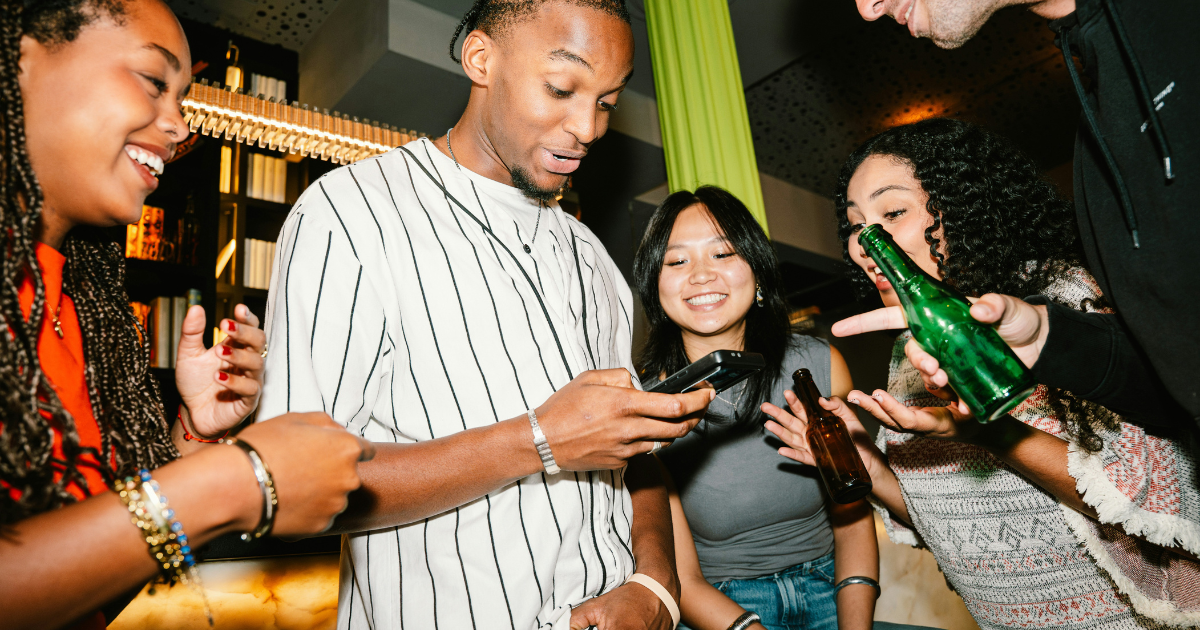
The same survey describes a distinct occasion profile. Gen Z is the most cocktail-oriented cohort: 84% drank cocktails in the past six months, more than any other generation. It’s the most social: 18% had five or more people present at their last drinking occasion. It’s also the most on-premise-inclined, according to 2025 data.
In 2025, IWSR tied the rebound to income: consumption “correlates with disposable income,” and Gen Z came of age during a cost-of-living crisis. As earnings rise, IWSR expected their behavior to converge with what Millennials did in their 20s. For brands, that profile is a targeting brief. The customer is in a bar with friends, ordering off the cocktail list, with more cushion in their bank accounts.
The moderation that remains
Moderation didn’t disappear from the data; it simply moved. Drinks per occasion fell to 3.9 from 4.4 in 2024 and 2025, a decline that appears to be structural rather than cyclical, while overall participation held steady at 76% against 75% three years ago. A stable base of drinkers having lighter nights means every occasion contains rounds alcohol used to own and no longer does.
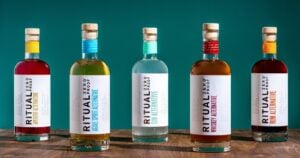
That’s the key point for alcohol alternatives brands. The opportunity is the second and third round on a cocktail menu, ordered by someone who also drinks—not an abstinence SKU in a wellness set. Ghia’s move beyond Dry January made a similar case from inside a brand; the survey data now confirms it from the outside.
If your pitch deck sizes the market by the share of this generation that doesn’t drink, rebuild it. Participation is climbing, but drinks per occasion are down, and each skipped round is an opportunity for your product. Which of their rounds are you built to win?