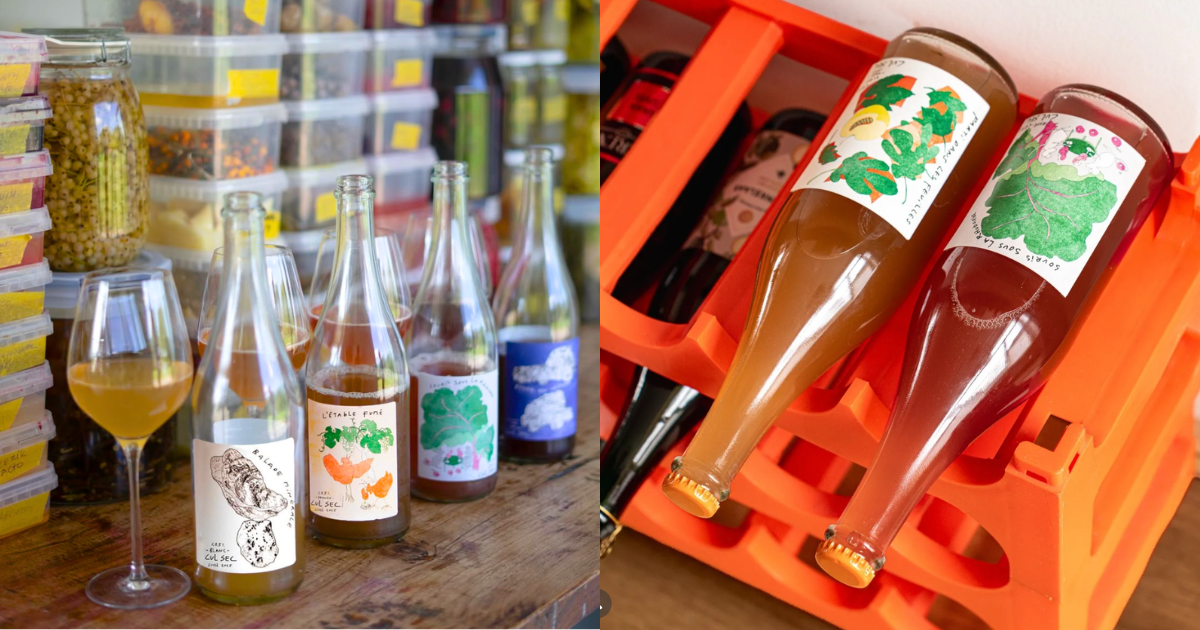
A premium product that maps to no existing shelf set faces a specific risk in retail: the buyer meets it with skepticism, and no one is standing there to resolve it. Cul Sec, a Dutch wine alternative entering the U.S. through importer Less than <0.5%, is structuring its entire market entry around that problem. The brand is leading with on-premise—specifically restaurants with serious beverage programs—and treating retail as a later, slower build. The sequencing is a bet on who does the educating.
A product the shelf can’t explain
Cul Sec is built from verjus, herbal infusions, and fermentation. It doesn’t fit cleanly in the dealcoholized wine set, which is the product’s differentiation and its comprehension problem at once.
Several challenges compound on a shelf. The product fits no existing set. The price sits above most non-alc options and requires justification. U.S. fluency in fermentation-forward, ingredient-driven alternatives still lags Europe; the language to place a product like this is only partially formed here. The one mechanism that reliably converts a skeptic is the first taste, and retail asks the consumer to pay a premium before that happens.
Expert mediation as a distribution strategy
Cul Sec’s answer is to put the product where trained palates supply the context the label can’t carry. Sommeliers and beverage directors read structure, dryness, and layered aromatics for a living. Placed in front of them, Cul Sec becomes a credible parallel to wine rather than an ambiguous premium beverage.
Jill Mott, Wine Director at The Carlyle, described the range as “thoughtful”—the kind of assessment the brand can carry into every subsequent account conversation. On-premise also guarantees the taste happens in a high-trust setting with an expert framing it. Consumer skepticism then fades on contact.
The limits of this strategy
On-premise-first is slow and low-volume, and Cul Sec is explicit that retail remains a deliberate build as consumer fluency in fermentation and wine alternative language develops. Restaurant traction is a credibility beachhead, evidence the product is good—separate from evidence the category is ready for it at retail.
The strategy also has a sharp applicability boundary. For a mass-market, low-price, or impulse product, retail velocity is the whole game. Expert-led entry only works if the product wins in front of experts; a product that can’t survive a sommelier’s assessment gets exposed faster this way.
The read for brands
In a segment still being defined, comprehension is the scarcest resource. A brand entering can compete inside existing language—the non-alc version of something familiar—or invest in building new language. Cul Sec is choosing the harder, slower path and using expert gatekeepers as the distribution mechanism for that new language. The trade is more education, set against a degree of differentiation that is rare in a crowded market.
Channel choice in an early segment is really a decision about who explains the product to the buyer. Before chasing distribution, name the person in each channel who will do that translation. If the honest answer in retail is no one, and your brand requires translation, that argues for entering where someone stands between the bottle and the consumer’s skepticism.