In cities like New York and London, status has long been tied to what you’re drinking—and where. The right martini, at the right bar, with the right people.
But as alcohol-free drinking becomes less of a curiosity and more of a cultural shift, a new kind of social venue is emerging: the alcohol-free members club.
The social pressure to drink
Even with the rise of sober curiosity, choosing not to drink still comes with cultural friction. A recent survey found that 30% of non-drinkers feel judged for their choice, and 41% have been asked to explain it. In the U.K., 64% of men reported experiencing “sober shaming” when trying to cut back.
The problem isn’t simply a lack of options on the menu. It’s the deeper reality that alcohol remains an invisible gatekeeper to many social spaces. It’s still the assumed default, especially after dark. If you’re opting out, you’re often opting out alone.
That creates a paradox: as demand for non-alcoholic beverages and experiences rises, the actual infrastructure to support those experiences—late-night spaces, elegant venues, spontaneous social hubs—has remained rooted in old assumptions.
The Maze: a signal shift
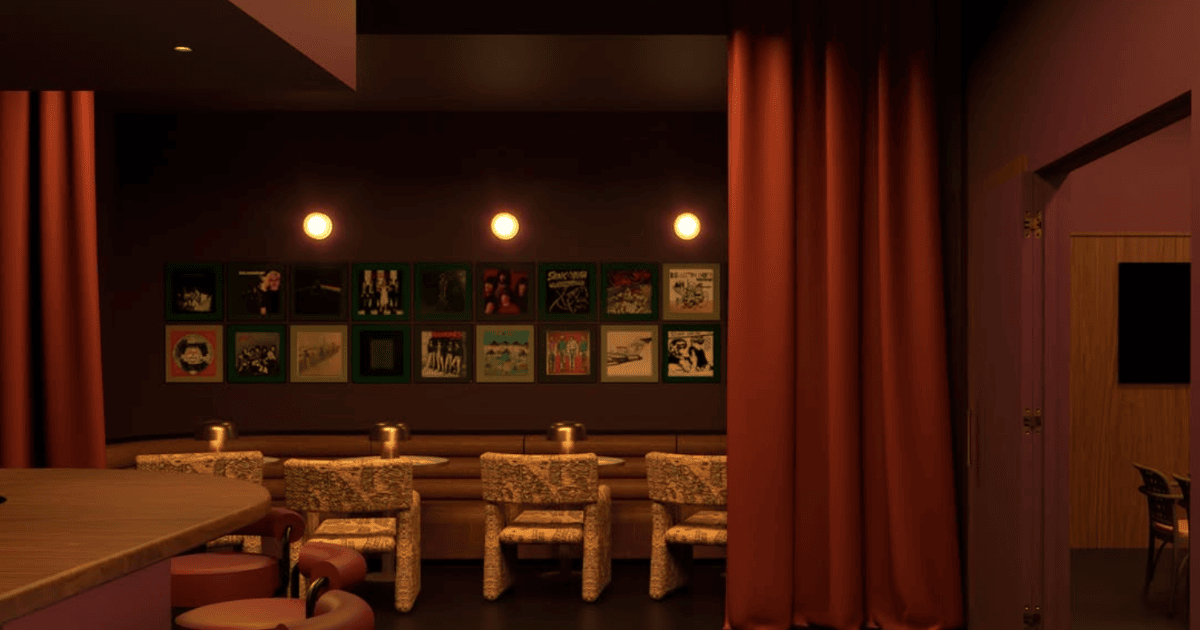
This fall, New York City will welcome what’s billed as its first alcohol-free members club: The Maze. Set in the Flatiron District, the 4,600-square-foot space will offer curated events, non-alcoholic cocktails, and a sleek, community-driven atmosphere designed for those who want meaningful connection. All without alcohol as the social lubricant.
The club’s polished design and members-only model suggest something deeper than a lifestyle choice. The Maze may mark a turning point in how non-alc is perceived as a marker of cultural capital.
Even traditional social clubs are paying attention. Soho House recently expanded its menu to include a lineup of non-alcoholic cocktails, including a virgin Picante and a booze-free Old Fashioned.
From sober curiosity to social wellness
In the U.K., former Wall Street worker Harrison Hide is building something similar—but on a much grander scale. His vision: a 53-acre alcohol-free wellness hotel and members club outside of London. The space will include events like cacao ceremonies and mindfulness programming, all designed around the concept of “social wellbeing” without alcohol.
As Harrison explained in a TikTok video: “I wanted a place where all aspects of my wellbeing—mental, physical, and social—could flourish. I couldn’t find it, so we decided to build it.” His fusion of wellness and hospitality taps into a broader movement: one that views sobriety as an intentional lifestyle rather than a temporary detox.
Third places, reimagined
Sociologist Ray Oldenburg once called bars the quintessential “third place”—spaces that exist outside of home and work, where informal community takes shape.
But as Sam Bail, Founder of Third Place Bar, once asked: why is it that, in most cities, nearly all of those places require an alcoholic drink to participate? After the pandemic, many sought to reconnect with third places only to realize how few existed outside the world of alcohol.
Alcohol-free members clubs aren’t the perfect fix, especially if they remain exclusive and expensive. But they do offer proof of concept: that it’s possible to create aspirational, adult spaces without defaulting to booze.
Looking ahead to the future of social events
For too long, abstaining from alcohol meant stepping out of the circle—or pretending to sip just to stay in it. These new spaces offer something else entirely: an invitation to participate, fully present, exactly as you are.
And in a culture that’s constantly telling us to consume more in order to feel more, that might be the most radical offering of all.