Presented by Society De La Rassi
In an industry where non-alcoholic wine is often geared towards the mass market, Society De La Rassi is redefining the space by focusing on luxury. Steve Jackson and Wesley Davis have set out to create an elegant, premium alternative to traditional wine—one that delivers the same celebratory experience without the alcohol. Society De La Rassi blends tradition with innovation, crafting a brand that aspires to sit alongside legacy champagne houses.
In this interview, Steve and Wesley discuss the process of selecting a Vintage Chardonnay from Spanish vineyards, the dealcoholization methods they employ, and the importance of maintaining a premium experience that doesn’t scream “non-alcoholic.” For them, it’s not about creating a wine alternative. It’s about reimagining what it means to celebrate and connect, without the limitations alcohol often brings.
Dry Atlas: While many non-alcoholic wine brands have taken a mass consumer route, you’re building a luxury-oriented brand. What inspired you to create Society De La Rassi?
Steve Jackson: I grew up in Australia, where drinking culture is pretty big. It got to a point in my life where I noticed my relationships and health were suffering, and alcohol was the common denominator. I knew I had to quit. My background is in filmmaking in the luxury events industry. There’s a certain experience that comes with celebration—popping champagne, raising a glass, toasting—and I’ve always been around that.
There’s definitely a darker side to the drinking culture I grew up with, but at the same time, there’s also so much joy in celebration. One year after going sober, I was at a non-alcoholic wine bar in New York and had my first glass of non-alcoholic wine. That moment made me realize how much I missed that experience—the taste, the atmosphere.
Initially, I wasn’t thinking about creating a wine brand. It started with me trying to find a wine I could personally enjoy. But I couldn’t find anything that really resonated with me—a brand or experience that matched the legacy champagne houses that have been around for centuries and created such iconic brand experiences. I felt that was missing in the market, so I set out to create something I connected with—something that could fit into the luxury event space. I saw the opportunity to have some fun with it. So, in a roundabout way, that’s how Society De La Rassi came to be.
DA: How did you go about creating a brand identity that connotes luxury and celebration?
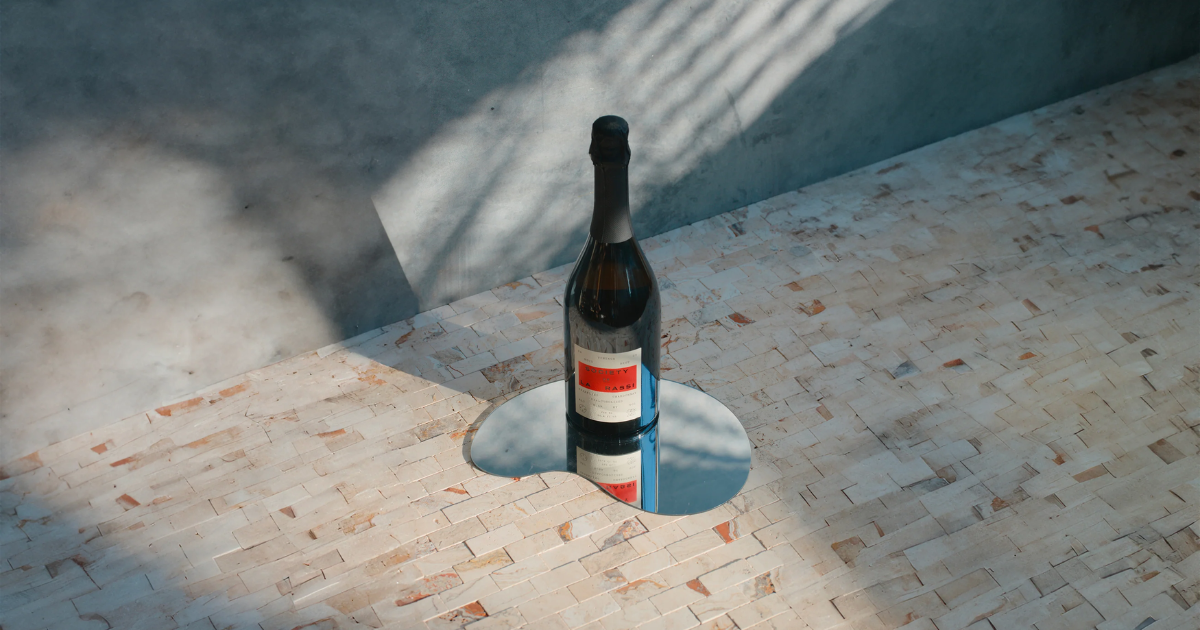
Wesley Davis: We drew inspiration from luxury heritage brands like Louis Vuitton and Hermès. We love the idea of legacy and folklore, and even though we’re a new brand, we wanted to bring that timeless, high-quality feel to our design. Everything, from the grapes to the glass, is of the highest quality. We didn’t cut any corners, and that’s really important to us. We’re not focused on lowering costs but on delivering the best possible product to the world.
SJ: With alcohol, there are so many inherent limitations—whether it’s how much you can consume, or the impact on personal life and health. Luxury brands that include alcohol are subject to those restrictions. We wanted to create a sense of luxury, but without those limits. Our goal was to build a brand that’s aspirational—something you can enjoy without the restrictions alcohol typically brings. It’s about connecting the world of luxury with the freedom to enjoy it without limitations. Something that still feels high-end, and doesn’t immediately scream “non-alcoholic,” if that makes sense.
DA: That makes a lot of sense. Ben Branson of Seedlip says the next generation of successful brands in this space will lean more on what the consumer is getting out of it, not what they’re giving up—and not focusing too much on “non” or “zero” on the packaging. It seems like you’re aligned with his perspective.
SJ: Definitely. Everything about our brand, from choosing a vintage rather than just a blend of grapes, to how we present the label, reflects that mindset. You wouldn’t immediately know it’s non-alcoholic unless you really look at it. When we present it to hotels or customers, they often don’t realize it’s non-alcoholic at first—they just see a beautiful, elevated brand. Our goal was to create something that could sit alongside Veuve or Moët and not feel out of place.
DA: I love that as a brand strategy. Let’s talk about the actual liquid. Can you walk us through how Society De La Rassi is made, from the Spanish vineyards to the glass?
SJ: We start with 100% Chardonnay wine, grown and produced just outside of Madrid in Spain. Our goal was to find something that really reflects the taste and feel of traditional wine—especially that acidity and citrusy profile. From there, everything we do is closed circuit: our vineyards are a few hours from our dealcoholization plant and our bottling is done just two hours from there. Then it’s shipped from the Valencia port.
There’s a clear distinction between winemaking and the formulation process in our approach. In the formulation and dealcoholization, we don’t add any sugars or anything that would remove the designation of being wine. Once you add flavors or other ingredients, it’s no longer considered wine, and we wanted to stay true to the concept of dealcoholized wine. We’re not trying to pretend it’s something else or enhance it with additives. It’s about offering a clean, pure wine experience—this is dealcoholized wine, and this is what it tastes like. We’re proud of that.
DA: That’s a unique approach, because many founders try to more directly compete with alcoholic wine. Do you see the wine category transforming over time, with what you’re doing becoming more integrated rather than intentionally disruptive?
WD: Absolutely. Balancing tradition and innovation is key for us. We started with Chardonnay—it’s that quintessential white wine, often associated with champagne and celebration. That familiarity was important to draw people in.
Where the innovation came in was the dealcoholization process and how we approach formulation. We don’t believe winemakers should have to change their craft just because of market shifts. We see ourselves sitting alongside legacy champagne brands, complementing them. Our focus is on providing mindful choices, no matter where someone is on their journey—whether they’re sober, cutting back, having a baby, or just not in the mood to drink. It’s about creating an inclusive landscape where customers make choices that feel right for them.
DA: So it’s more about offering an alternative and expanding the category rather than replacing it entirely. How do you see Society De La Rassi fitting into this landscape?
SJ: Exactly. We’re not saying any and all alcohol is bad; we’re just mindful of its excess. We also wanted to use clear, direct language in our branding—terms like “alc 0.5% by volume” rather than “zero.” After the dealcoholization process, we chose to add back under 0.5% ABV in our formulation, as we feel that this exponentially improves the quality without compromising the dealcoholized wines’ non-alcoholic status or affecting the body in any way. We’re not targeting the masses, but rather a specific audience that appreciates tradition without needing the alcohol.
DA: What sets Society De La Rassi apart from other non-alcoholic sparkling Chardonnays?
SJ: From a taste perspective, we believe we’ve created something truly unique in both aroma and palate. By keeping less than 0.5% alcohol in the wine, we’ve preserved a level of quality that’s hard to match. Some customers might avoid it because of the small amount of alcohol, but we feel the improvement in quality is worth it.
There’s also education required around that point. Fermented drinks and various fruits can contain as much alcohol as our dealcoholized wine. But we’re not trying to be everything to everyone—we’re focused on creating a product true to our values and tastes.
DA: Beyond taste, what kind of experience do you want people to have with Society De La Rassi?
WD: The experience is just as important as the taste. When you’re not drinking, you miss the feeling of connection—of being part of a celebration. We want to create that same sense of joy and inclusion. Whether it’s popping a bottle or toasting with friends, our branding and product are designed to create those memorable moments. It’s about opening doors, not missing out.
DA: That’s a beautiful concept. Your product isn’t just a beverage—it’s a way for people to feel connected and part of the celebration. What are you most excited about as you launch the brand?
SJ: I’m excited about redefining heritage. My background is a mix of Australian, Indian, and Italian cultures, and the product was created in New York but made in Spain. We aren’t bound by tradition, and that gives us the freedom to innovate. The fact that we’re dealcoholizing wine adds another layer of magic—it’s still wine, but it’s different, and we’re embracing that change.
WD: We’re also excited about what we can create in the future, not just in wine, but in redefining what it means to be a luxury brand in today’s world.
Society De La Rassi will be available in the US early October. Join the waitlist to receive special offers and access to their upcoming events.