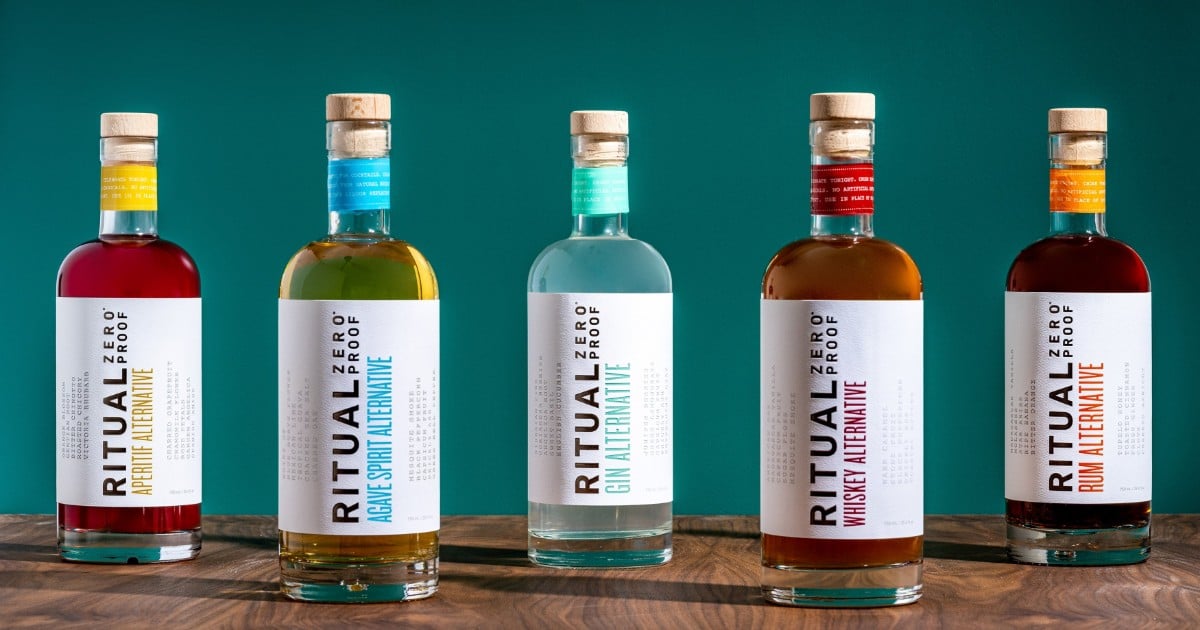
Half of the non-alc spirit alternatives in the Dry Atlas Product Database with a published U.S.-dollar price are listed between $29.99 and $39.99. The median, across 113 products as of Oct. 21, is $36. A band that tight means that a shopper holding a $32 bottle and a $36 bottle is comparing two numbers that both read as premium.
The number that does vary is the one most brands leave off the page: what a drink costs. Ritual Zero Proof, owned by Diageo North America, prints it. The product page for its 750ml Gin Alternative lists “17 Servings Per Container” and “$1.79 per serving” beside a $29.95 sale price, with $1.49 per serving on subscription.
We checked the U.S. product pages of the 37 spirit alternative brands in the product database with a published U.S.-dollar price. Of the 31 whose U.S. pages show a price, just two print a dollar figure per drink. Ritual is one. Monday is the other, with “$2.35 / cocktail” under the $40 price on its gin page.
A serving is whatever the brand says it is
Brands don’t agree on what a serving is. Ghia and Lyre’s count 1 fl oz. Ritual, Monday, and Free Spirits count 1.5 fl oz. Seedlip doesn’t give a size; its page says a bottle “makes 12-14 cocktails.”
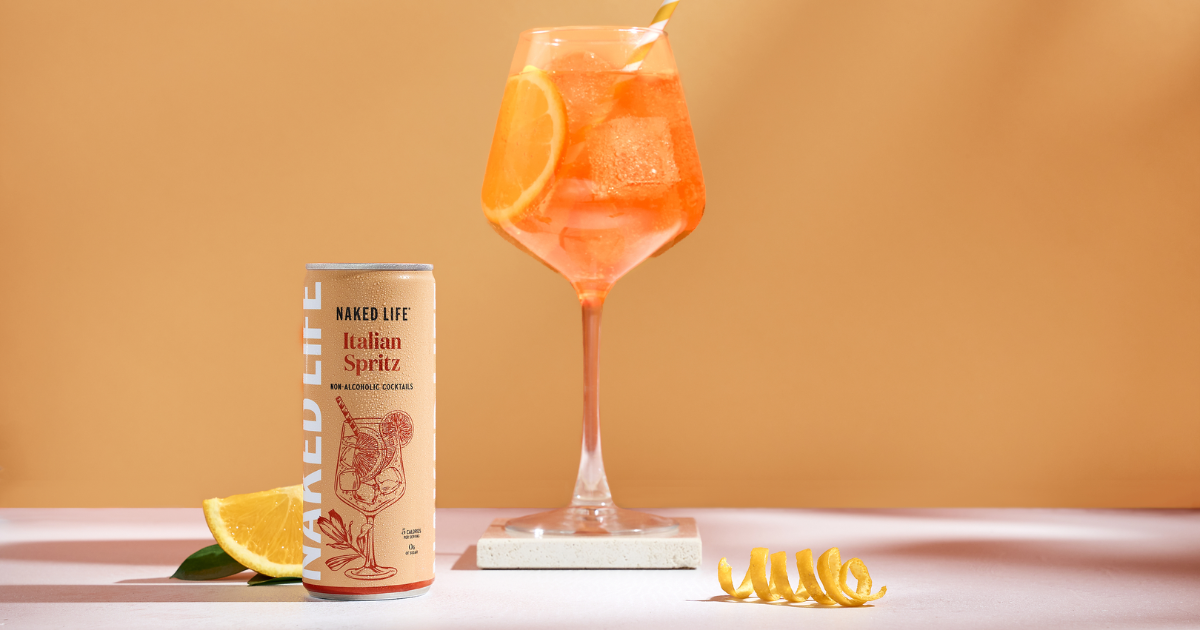
Divide each bottle’s price by its own serving count and a serving costs about $1.65 for Lyre’s, $2.00 for Free Spirits, $2.24 for Ghia, $2.29 to $2.67 for Seedlip, and $2.35 for Monday, against the $1.79 Ritual prints. The sticker prices of these six bottles sit within about a third of each other, $29.95 to $40. The per-serving figures run roughly 60% apart.
Some of that gap comes from the serving definition, not the price. Pour every bottle at 1.5 ounces and Lyre’s goes from the cheapest serving in the set to the second most expensive, at about $2.41. Ghia, a 500ml apéritif usually served with soda, rises to about $3.37. Ritual barely moves, to $1.77, the lowest of the six.
When sticker prices cluster, the serving definition becomes the pricing decision. A $30 bottle gets judged against other $30 bottles, which on most shelves means full-strength spirits. A $1.79 serving gets judged against a drink, and that’s a more favorable comparison.
Before you copy this play
Printing the figure costs almost nothing to produce; it’s a product page edit and a label decision. The catch is that the number has to survive the customer’s own math.
Ritual’s 17 servings are 1.5 ounces each, and the G&T, Cosmopolitan, and Gimlet recipes on the same page each call for 2 ounces. Poured the way Ritual pours it, a G&T costs about $2.36. Monday’s “makes 17 cocktails” rests on the same 1.5-ounce serving, while most of its published recipes pour 2. If the recipes on your own page pour 2 ounces and your label counts 1.5, shoppers may notice.
And brands whose per-drink math lands at the top of the range have the most reason to leave it off the page, which is what makes printing it a positioning choice rather than a disclosure. The reverse case is sitting in the product database too: Undone’s Not Gin is $25 for 25 one-ounce servings, and the page doesn’t list the math. At its own 2-ounce G&T pour, that’s about $2 a drink, below Ritual’s $2.36.
The test is simple: price a drink at the pour your own recipes use. If that number still beats the bottle’s $30 comparison, print it. If it only works at a smaller pour than your recipes call for, the sticker is the safer number to compete on.