Presented by Wefunder
Fundraising for emerging beverage brands runs through a short list of doors, and most of them open slowly. Institutional checks concentrate in brands with proven velocity. Angels move at the speed of relationships. Family offices want to see the retail story already working. The business, meanwhile, needs inventory, doors, and marketing on a schedule that ignores all of that. A community round—raising from individuals through Regulation Crowdfunding—is sometimes seen as a fallback for founders locked out of those doors. Nkd Distillery’s raise supports a different read: the instrument plays a role the others can’t.
A funded brand chooses the crowd
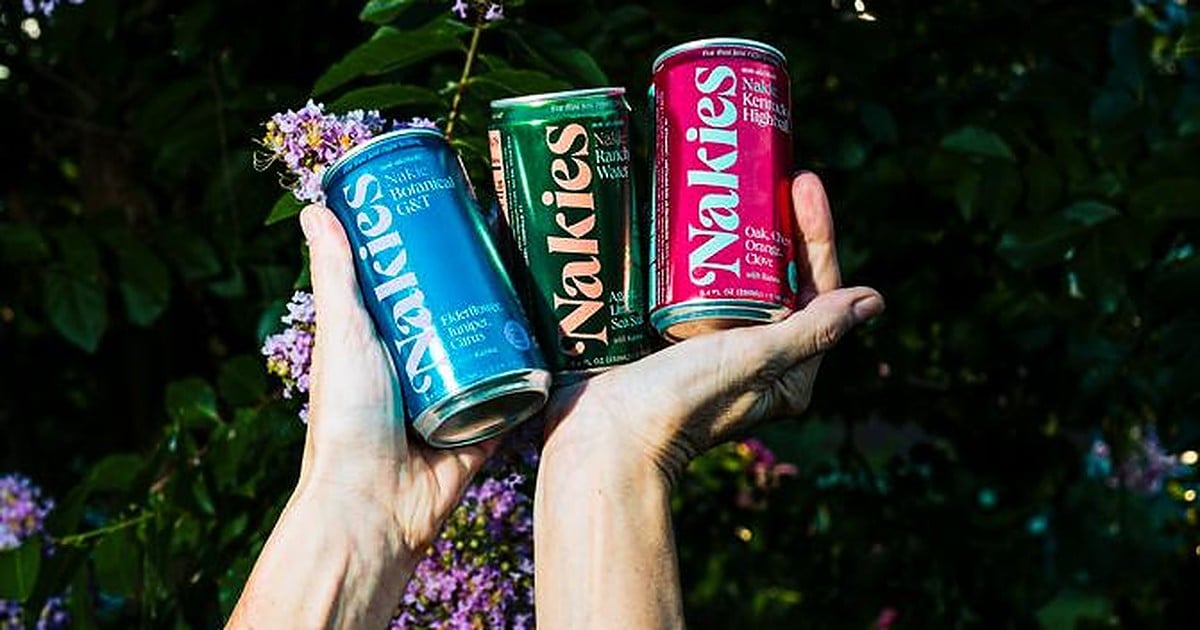
Louisville-based Nkd Distillery makes non-alc spirits by starting with real distillates, and recently extended into ready-to-drinks with their Nakies line. Founder Becca Gardner wasn’t new to fundraising when she took the company to Wefunder in 2024. Across the life of the business, she’s raised from friends, angels, family offices, and VCs. The community round sat alongside those instruments, not beneath them. Her campaign closed at $119,925 from 122 investors.
The raise arrived at a moment of real constraint. The company needed capital, and a traditional process was a poor fit for where the business stood. An existing investor offered to match the first $20,000, which the campaign cleared within days—and a newly mapped direction, developed with two advisors from Red Bull, gave the campaign a story worth telling.
There was a personal dimension as well. Gardner had just had her first child and was navigating postpartum depression. “I didn’t want to be investor-facing,” she says. “Wefunder gave me a way to raise with the support of my business partner, advisors, and their team at a moment when I couldn’t show up in the way a traditional fundraise would have required.” That points at a feature of the model rather than a workaround: a community round distributes the work of raising across the campaign, the team, and the platform, so it doesn’t depend on the founder running a months-long roadshow alone. For any founder whose bandwidth is consumed by operating the business—or by life—that’s a key difference.
The campaign as forcing function
The process imposed discipline of its own. “Wefunder gave us a way to raise capital while also forcing us to get organized and articulate where the business was going,” Gardner says. Assembling a public campaign means producing the deck, the financials, and the forward story on a deadline, for an audience that includes existing investors and customers alongside strangers.
It also functioned as a market test with stakes attached. “There’s something particularly interesting about asking someone not just whether they like your idea, but whether they believe in it enough to actually invest in it.” Feedback from a customer costs them nothing. Feedback from an investor writing a check is a different tier of information. A community round collects that at scale, from far outside a founder’s immediate circle.
What the raise unlocked
The answer came largely from people Gardner had never met. “By the end, more than 90% of our investors were people I didn’t know,” she says. While raising was somewhat harder than she had anticipated, the campaign delivered what the business needed. The raise unlocked what followed: the company has raised another $500K since, Gardner says, and gained the chance to build “the company we actually set out to build.” Some of those 122 investors have become friends and active supporters of the brand.
Her sharpest hindsight concerns what a campaign unlocks. “I treated it too much like a fundraise and not enough like community building,” she says. Run again today, her campaign would include podcasts, sampling, customer incentives, and far more conversation. That makes investment feel “less like an opportunity to maybe make money someday and more like an invitation to have some ownership in something you’re genuinely excited to help build.” Capital is just one component of a community raise. The other: people with a financial reason to order the product, request it at retail, and talk about it.
Who a community round is for
Readiness, in Gardner’s telling, has little to do with polish. “You need enough proof to convince a stranger to bet on you.” Think revenue, retail traction, an engaged customer base, an incredible product, a compelling founder story. Community rounds work at different stages, including funding something specific like a pivot. She is direct about the cost: “It is a real fundraise and a real commitment of time; I wouldn’t approach it as easy money.”
For founders weighing a campaign, her advice starts before launch: know where the first chunk of capital is coming from. “The word ‘crowdfunding’ makes it sound like the crowd magically appears when your campaign goes live. They don’t.” Nkd’s $20,000 match created momentum strangers could see, and early momentum compounds. “It’s a whole lot easier for a stranger to bet on you when they can see that other people already have.”
Wefunder is where founders raise community rounds from the people who want to see them win. Dry Atlas readers who raise through Wefunder pay a 6.9% platform fee instead of the standard 7.9%.