
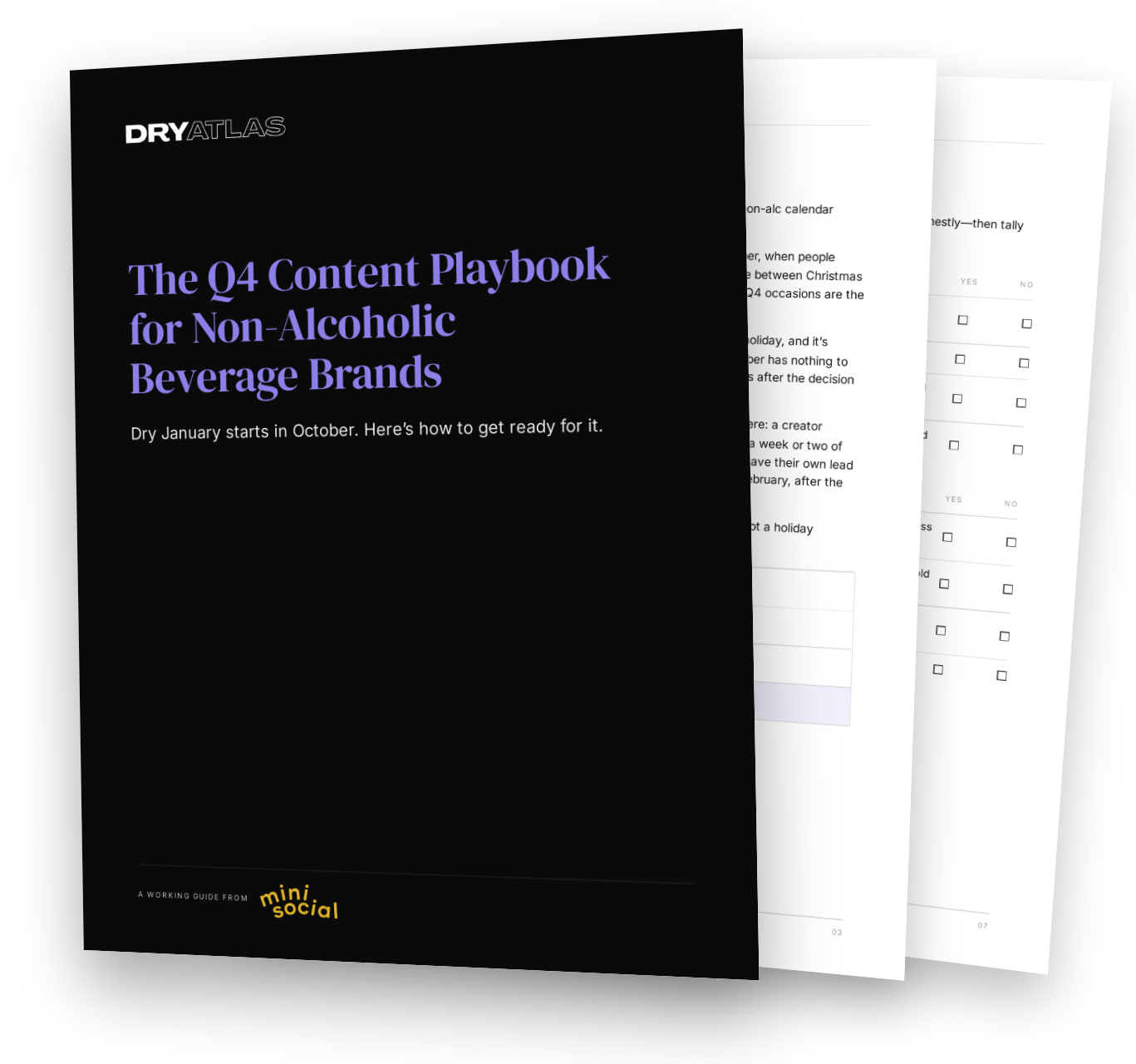
Dry January starts in October. Is your content ready?
The Q4 Content Playbook for Non-Alcoholic Beverage Brands explains why the category’s biggest month is made in the quarter before it.
Three things that separate January winners
Plan for January, not December
Why the non-alc calendar builds toward January, and the 16-week program that replaces “holiday campaign, then Dry January campaign.”
Make more than you think you need
What a January program consumes across paid, email, product pages, and retail—and the two expensive ways brands paper over the gap.
Source content that scales
Studio, team-shot, and creator content compared on cost, speed, volume, trust, and usage rights, and the two things that decide whether creator content solves the problem.
Plus: the 15-Question Scorecard. A self-audit on your Q4 plan—calendar, volume, proof from real people, and whether you own the rights to what you’re running.
Marketing leads and founders at non-alcoholic beverage brands who’ve lived some version of this: the holiday push went fine, then January arrived and the creative was already tired. If that sounds familiar, this guide was written for you.
Find out whether you’re ready for the category’s biggest month.
Three things January winners do differently, plus the 15-question readiness scorecard.
Fully licensed creator content, in time for January
minisocial pairs consumer brands with vetted micro-influencers to produce fully licensed content that works on product pages, in email, in paid social, and at retail, with usage rights settled up front. Brands build a brief, minisocial handpicks and books the creators, and the brand receives the finished assets with rights to use them wherever they need to.
Most campaigns run four to six weeks from brief to finished content: the window between an October brief and content in hand for January.
Learn more about minisocial